
security configuration review include policy validation
Every organization establishes security policies to protect its information systems, sensitive data, and business operations. These policies define how systems should be configured, who should have access to critical resources, how passwords should be managed, and what security controls must be implemented across the IT environment. However, creating policies alone is not enough. Organizations must also verify that their technology infrastructure actually follows these documented requirements. This is one of the key reasons why configuration assessments have become an essential part of modern cybersecurity programs. A security configuration review helps determine whether technical settings align with internal security policies as well as recognized industry standards.
A security configuration review is a structured evaluation of system configurations across servers, workstations, applications, databases, network devices, cloud environments, and other technology assets. The assessment examines existing settings to identify security weaknesses, configuration errors, and deviations from approved baselines. One of its important functions is validating whether implemented configurations comply with organizational security policies and regulatory requirements, ensuring that security controls are consistently applied throughout the environment.
Policy validation is a critical aspect of cybersecurity because inconsistencies between written policies and actual system configurations create unnecessary risk. Organizations may require strong password policies, restricted administrative access, encrypted communications, or secure logging practices, but if these controls are not correctly implemented, the policies provide little practical protection. A security configuration review bridges this gap by verifying that security policies are reflected in real-world technical configurations rather than existing only as documentation.
One of the first areas evaluated during a security configuration review is identity and access management. Most organizations maintain policies defining how user accounts should be created, managed, and removed. They often specify password complexity, account lockout thresholds, multi-factor authentication requirements, and privileged access restrictions. Security professionals compare actual account settings against these policies to ensure users have appropriate permissions and administrative privileges are assigned only where necessary.
Password management policies are another important focus during the assessment. Many organizations require minimum password lengths, complexity rules, expiration schedules, and restrictions against password reuse. A security configuration review validates whether these requirements are properly enforced within operating systems, applications, cloud services, and authentication platforms. Weak or inconsistent password configurations can expose organizations to brute-force attacks and unauthorized access even when comprehensive password policies exist.
Network security policies also require regular validation because network devices play a central role in protecting organizational assets. During a security configuration review, experts examine firewall rules, router configurations, wireless security settings, virtual private network controls, network segmentation, and remote access permissions. The objective is to confirm that network devices are configured according to organizational policies rather than relying on default settings or outdated configurations that may expose sensitive resources.
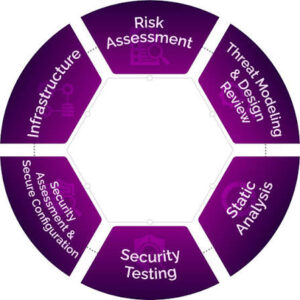
Does security configuration review include policy validation?
Operating systems are another critical component of policy validation. Organizations typically define hardening standards covering unnecessary services, remote administration, security logging, software installation, file permissions, and update management. A security configuration review compares system configurations against these documented standards to verify that security controls are consistently implemented across all servers and workstations. This process helps reduce inconsistencies that attackers frequently exploit.
Cloud computing environments introduce additional policy validation challenges because organizations often operate across multiple cloud providers and hybrid infrastructures. Internal security policies may specify encryption requirements, identity management standards, storage permissions, virtual network configurations, and monitoring expectations. A security configuration review examines cloud resources to determine whether these requirements have been correctly implemented, helping prevent accidental exposure of sensitive information caused by cloud misconfigurations.
Application security policies are equally important because business applications often process confidential customer information and critical organizational data. During a security configuration review, security professionals verify authentication methods, session management settings, encryption controls, application logging, backup procedures, and access restrictions. Comparing these configurations against internal security policies ensures applications operate securely while supporting compliance objectives.
Database systems also require policy validation because they frequently store sensitive financial records, customer information, healthcare data, intellectual property, and operational information. Organizations generally define policies regarding database authentication, user permissions, encryption, auditing, and backup procedures. A security configuration review evaluates these settings to ensure database security aligns with approved policies and protects valuable information from unauthorized access.
Another important benefit of policy validation is ensuring consistency throughout the technology environment. As organizations grow, different departments may deploy systems using varying configuration practices. Without regular assessments, similar systems may have significantly different security settings despite being governed by the same policies. A security configuration review identifies these inconsistencies, enabling organizations to standardize configurations and strengthen their overall security posture.
Compliance requirements further increase the importance of policy validation. Regulatory frameworks such as PCI DSS, ISO 27001, HIPAA, SOC 2, and NIST cybersecurity guidance emphasize the implementation and verification of security controls. Simply documenting policies is insufficient for demonstrating compliance. Organizations must provide evidence that technical configurations support those policies. A security configuration review helps generate this evidence by documenting configuration compliance and identifying areas requiring improvement before external audits.
Automation has become an important part of modern configuration assessments. Security tools can compare system settings against predefined security baselines, organizational policies, and industry benchmarks across thousands of devices in a relatively short period. However, automated scanning alone cannot fully evaluate every policy requirement or account for business-specific exceptions. Security professionals supplement automated analysis with manual validation during a security configuration review to confirm findings, assess risks, and provide context-specific remediation recommendations.
The assessment typically concludes with a detailed report outlining configuration deviations, policy compliance status, associated risks, and recommended corrective actions. This report provides management and technical teams with a clear understanding of where policy requirements are being met and where improvements are necessary. Prioritized remediation guidance helps organizations address the most significant issues first while strengthening long-term governance and security management.
Technology environments continually evolve through software updates, cloud migrations, infrastructure expansions, mergers, and changing business requirements. These ongoing changes can introduce configuration drift, where systems gradually move away from approved security baselines. Performing a security configuration review on a regular basis ensures that policies remain effectively implemented as environments change, maintaining alignment between documented security requirements and operational systems.
Ultimately, a security configuration review does include policy validation as one of its most valuable functions. By verifying that technical configurations accurately reflect organizational security policies, industry standards, and regulatory requirements, the assessment helps organizations strengthen defenses, reduce operational risk, improve compliance, maintain consistency across complex environments, and build a more resilient cybersecurity program capable of adapting to evolving threats.